Florida’s Big Dig

The story of the Intracoastal and other thoughts on water, waterways, land, and ecology

  • A freak storm overturned boats on Lake Sylvia (or Sylvan), a small protected lake surrounded by high-end residences in Ft. Lauderdale, Fla.

    Lauderdale anchorage

    Region: Atlantic ICW – FL & St. Johns R.   One quarter mile from Intracoastal

    Date Reported: Feb 17, 2016

    Reported By: Mike Ahart, Waterway Guide News Editor

    Submerged boat in Lake Sylvia, Fort Lauderdale, Fla. result of freak storm
    Submerged boat in Lake Sylvia, Fort Lauderdale, Fla.

    Source: Sun-Sentinel,NBC Miami,Boater Reports

    A freak storm spawning tornados swept through areas of South Florida, overturning two occupied boats in Lake Sylvia, a popular anchorage just off the ICW at Mile 1064.5 in Ft. Lauderdale, and wreaking havoc across the region Tuesday morning, Feb. 16, 2016.

    According to a NBC Miami report, one person was taken to the hospital and several people were rescued from the water in Lake Sylvia, but only minor injuries were reported. Wind speed reports from media and boaters range from 50 to 90 knots.
    The powerboat was raised yesterday and towed to a local marina, and the catamaran was righted and dewatered today, according to reports

    The Sun-Sentinel interviewed the owner of the flipped catamaran

    Doug Reaney, 67, said from a Fort Lauderdale fire station that he was “a little wet” after being rescued from Dream Catcher, the flipped catamaran that the retired Navy veteran calls home. “I’ll probably be black and blue one of these days but I’m not hurt in any substantial way
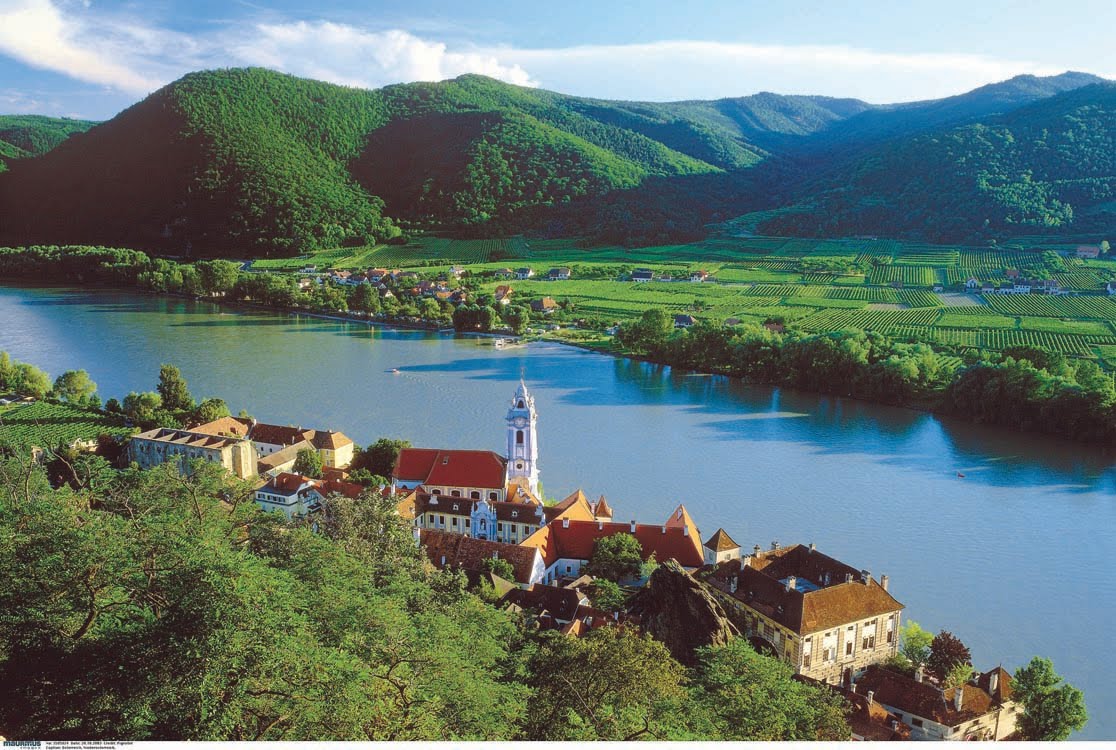
  • The Danube River runs through the German countryside
    The Danube River is the second longest of the European Rivers. It runs 1,777 miles through seven countries connecting Budapest, Vienna, Bratislava, Belgrade, Uln, and Linz among others. Nineteen countries share the Danube River Basin supplying water for over 80 million people.
  • The fact I

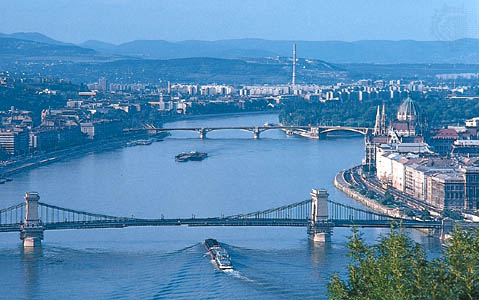
    The Danube River coursing its way through Budapest, Hungary
    The Danube River coursing its way through Budapest, Hungary


    At one time, Budapest was the center of one of the great empires of the world. The Great War broke up the Austro-Hungarian Empire  into Austria, Hungary, and other Central European nation-states both great and small.

    In this view, two main structural themes for building bridges are shown. In the foreground, the newer suspension bridge demonstrates the strength of many wires bundled together and attached to two magnificent columns and securely grounded far beyond the columns deep into the ground on both sides. This grounding at both ends keeps the bridge from collapsing into  the middle.

    The second bridge in the distance shows the older method of bridge construction. The arch bridge has worked well for centuries, even as far back as the Romans colonizing England. Again, it is the secure attachment deep into the ground at both ends which keeps the bridge from  failing in the middle.  Arch bridges are limited by length.  On the other hand, theoretically  there seems no end to the rivalry over the length of suspension bridges.


  • Rough map of the European countries now existing and the course of the Danube River from southern Germany to the Black Sea.


  • A modern home in Germany
    A modern home in Germany

    Some of the modernist or post-modern architects wouldn’t know a straight line if it was the shortest distance between two points or the most direct route between New York and Miami.  Every year, they bring home a truck load of trophies, awards and more than their fair share of the commissions. Yes, they are different. But the last time I checked reality, a two by four piece of lumber was still straight and a standard concrete block presented two straight surfaces, creating a level finished surface.

    Enough of biomorphic or even polymorphic surfaces. Biomorphic imagery is for artists like Jean Arp. I like sculpture by Arp. But not architecture.
     Most biomorphic buildings generate the most law suits because contractors use a straight edge to lay out and build a building. They leak like crazy. And interior designers went to school to fill a rectangular shaped building.
    Not a circle.  What do you get when you fill a garbage can with bricks?  A lot of wasted space. A dysfunctional garbage collection scheme. Has the world gone mad?

    Give me the straight lines of the rectangularly shaped building.

  • The course of the Oxford v. Cambridge boat rowing course
    The course of the Oxford versus. Cambridge boat rowing contest.