I am Bill Crawford. I was born and raised in Ft. Lauderdale, Fla., bisected by the Intracoastal. I graduated from the University of Virginia with a bachelor’s degree in commerce, with distinction, concentrating in finance. I obtained my juris doctor degree from Stetson University College of Law. I have practiced law for more than 43 years. I am a professional historian and author of the award-winning book, “Florida’s Big Dig,” (2008) the story of the Atlantic Intracoastal Waterway.
I have practiced law in Florida since 1975. Along the way, I developed a keen interest in researching and writing history, publishing numerous scholarly journal articles and one award-winning book, “Florida’s Big Dig,” the story of Florida’s Atlantic Intracoastal Waterway, using my legal pbackground to understand legal transactions, deeds, wmortgages, bonds, preferred stock, and legal descriptions of land and water.
In recent years, I have maintained a limited practice consulting with other professionals on various historical land and water issues, including sovereign, riparian, and submerged land rights, focusing on the Atlantic Intracoastal Waterway and Florida inland waterways.
I maintain a broad regular website here at www.floridasbigdig.me and a website solely on how the book was researched as well as some of the major themes explored. The website on the book itself is at www.floridasbigdig.com.
The website on contacts for professional services is at www.floridasbigdiglawyer.com?. A fifteen-page outline of my book
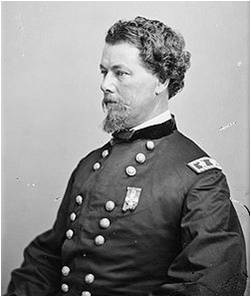
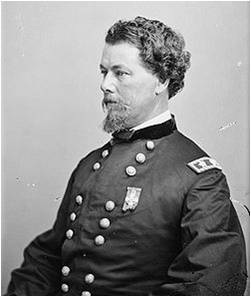
Horatio G. Wright was the first Florida chief of the U.S. Army Corps of Engineers (1852-1854). Wright superintended the first cut in what would become the Florida section of the Intracoastal Waterway, joining the Matanzas and Halifax rivers at Titusville, Fla. After years of wrangling over Congress’s constitutional powers, Congress authorized a mere pittance of $1,200 to dredge a short cut two feet deep and ten feet wide to join the waterways for military defensive purposes.
At the country’s founding, Thomas Jefferson had fought for a military with limited powers to survey the internal improvements of the Nation but not to spend a dime’s worth of taxpayer dollars for construction of roads, waterways, and bridges. Alexander Hamilton and other Federalists pursued an expansive view of the military to fund inland waterways at taxpayer expense. The small waterway at Titusville represented a grudging nod to a burgeoning nation with the need to transport commerce and defend the Nation. Courtesy, U.S. Army Corps of Engineers.
The listing of tolls to travel along what would become the Intracoastal Waterway between several points along the privately owned Florida East Coast Canal in 1911. During its long history, the “Swan” would carry freight and passengers, and often, passengers and their automobiles. Freight included large cargoes of citrus fruit and pineapples in the late 1890’s. A toll charge of $1 equalled one day’s wages for the average laborer at that time. Courtesy, Rollins College, Winter Park, Fla.
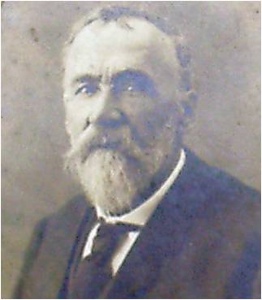
Original incorporator and director of the Florida canal company, James Colee (pronounced, ‘Coolee’) served as an engineer in the dredging of the Intracoastal Waterway until his death in 1912. Colee also served as state representative and county commissioner for St. Johns County and was a stockholder in the First National Bank of St. Augustine. In Fort Lauderdale, a bend in the New River is known as Colee Hammock and Colee is pronounced there as ‘Ko-lee’ Hammock. Colee is a French Huguenot name and pronounced throughout St. Johns County (St. Augustine) as ‘Coolee’. There is much confusion in Fort Lauderdale between William Cooley, justice of the peace in the New River area and whose family was massacred by the Seminoles in 1836 and James Colee who camped in the hammock there during his survey work for the waterway in 1893. Perhaps the difference in pronunciation led to the confusion between the two names. Courtesy, Donn R. Colee (an eighth generation native Floridian).
Wright was the first Florida chief of the U.S. Army Corps of Engineers (1852-1854). He superintended the first cut in what would become the Florida portion of the Intracoastal Waterway, joining the Matanzas and Halifax rivers at Titusville, Fla.
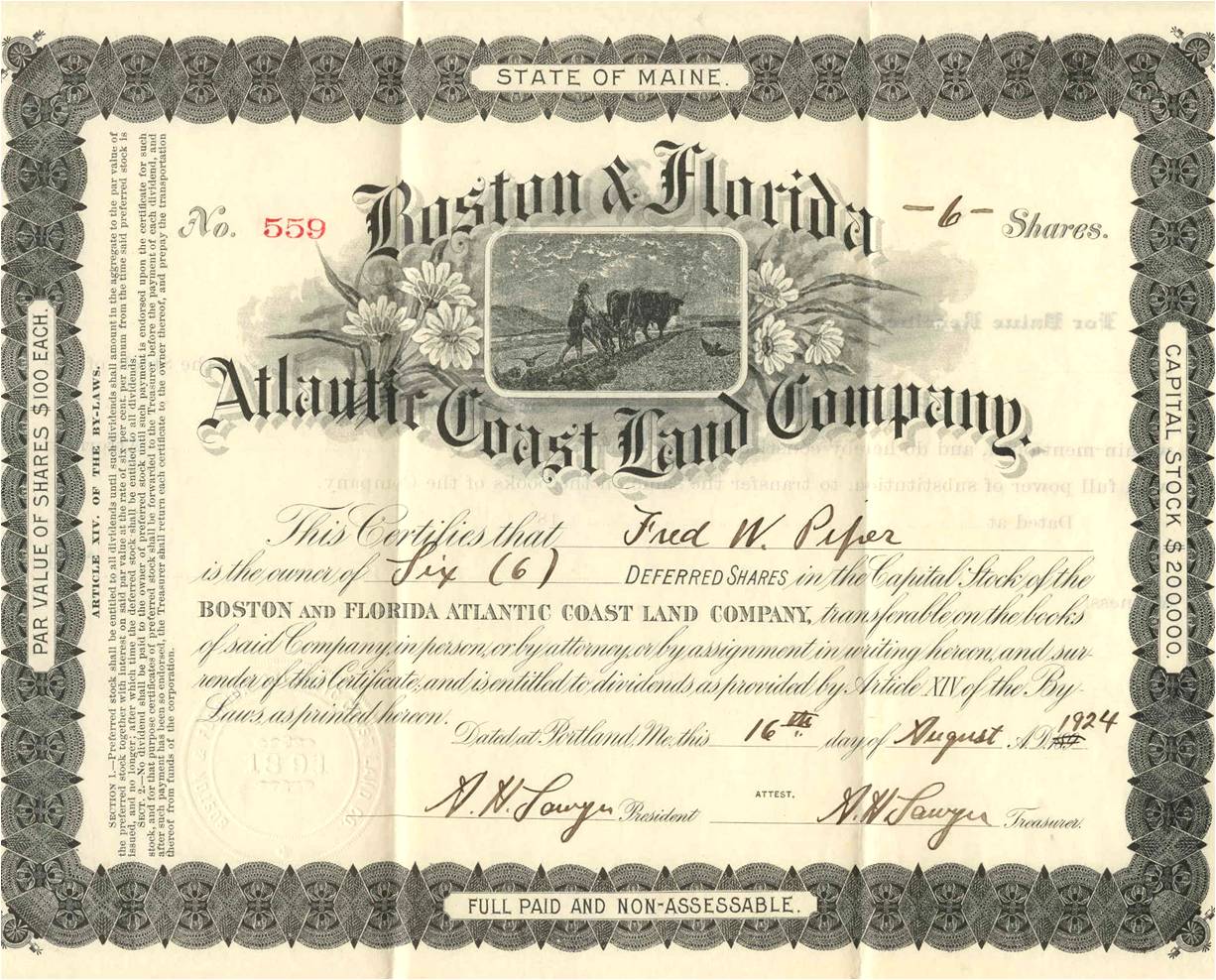
Boston & Florida Atlantic Coast Land Company stock certificate issued in 1924
In 1892, to raise additional cash to finance canal dredging, Bradley enlisted the assistance of Albert P. Sawyer, a wealthy Newburyport, Mass. investor to organize a new company to raise $100,000. Sawyer selected the State of Maine as the venue for the new enterprise because Sawyer believed that Maine assessed the least amount of incorporation taxes. The purchase of one share of preferred stock would entitle the investor to cumulative dividends with preference over common stock. In other words, the preferred shareholder would be entitled to dividends and the liquidation of stock before the payment of dividends on common stock and the liquidation of common stock. Within a few years, Sir Sandford Fleming, formerly chief engineer of the Canadian Pacific Railway, would become one of the largest investors in the new land company. Courtesy, Collection of the author.
Dr. John Diament Westcott (1807-1889) served as president of the Florida canal company from 1881 until his death in 1889. Born in New Jersey, Westcott briefly attended West Point before leaving for medical reasons. For a time, he also attended medical school in Philadelphia before relocating to the Territory of Florida, serving as secretary to his older brother, James Westcott, the Territory’s first Secretary of State. Westcott soon became proficient in medicine, chemistry, mineralogy, and surveying. As a surveyor, Westcott became Surveyor General in charge of surveying the federal lands of the new State of Florida in 1850. Westcott’s knowledge of public lands along the East Coast of Florida when he later became president of the Florida canal company would prove useful in selecting choice state lands for the dredging work his company was to perform in the years ahead. Courtesy, Museum of the Confederacy, Richmond, Va.
Home first of Charles S. Bradley, former Chief Justice of the Rhode Island Supreme Court and father of George L. Bradley. By the late 1880s, George Bradley became the primary financier of the construction of the privately owned Florida Coast Line Canal & Transportation Company which would later become Florida’s Atlantic Intracoastal Waterway. George grew up in his father’s home, one of George’s three principal residences throughout his life. Today, the home is St. Martin Hall of Providence College. The college bought the residence from the Estate of George Lothrop Bradley after he died in 1906. It should be noted that several references, including Wikipedia, improperly state that George’s middle initial was “M.”
Born in Providence, R.I., in 1846, George Lothrop Bradley had made three fortunes by the time he had become the largest investor in the Florida waterway. Bradley made his first fortune investing in the Newport Mining Company, a square-mile iron mine property along the Michigan upper peninsula-Wisconsin border, in the late 1870s. The mine would produce ore for another seventy years. His second fortune came when he invested in the Mergenthaler Linotype Company, an enterprise based on the invention of a new method of publishing. Molten lead would be poured into an entire line of type instead of composing a line of type single letter-by-single letter. Bradley made his third fortune investing in Alexander Graham Bell’s new invention–the telephone. Civil War financier Jay Cooke introduced Bradley to his fourth opportunity to become even more wealthy by investing in the Florida canal company beginning in the mid-1880s. Courtesy, Emma Pendleton Bradley Hospital, East Providence, R.I.



 Florida’s Big Dig