Florida’s Big Dig

The story of the Intracoastal and other thoughts on water, waterways, land, and ecology

  • The nation’s third president, Thomas Jefferson, constantly fought Alexander Hamilton, first Treasury Secretary under President George Washington, over Hamilton’s liberal views of the Constitution. Jefferson believed in a strict construction of the Constitution. Adamantly opposed to Hamilton’s support of a standing (permanent) army, Jefferson supported the Military Peace Establishment Act, which founded the U. S. Military Academy at West Point.
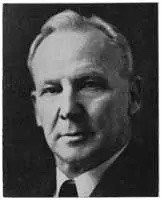
    Col. Gilbert A. Youngberg, Florida Chief of the Army Engineers (1922). Courtesy, Rollins College, Winter Park, Fla.
    Col. Gilbert A. Youngberg, Florida Chief of the Army Engineers (1922). Courtesy, Rollins College, Winter Park, Fla.

    Jefferson believed the federal government should train its best soldiers to survey but not build inland waterways, roads, and bridges as army engineers. In fact, because the Academy believed that French engineering produced better infrastructure based on more solid concepts over British engineering, West Point cadets read their engineering textbooks in French in the early years. Moreover, cadets who graduated in the top ten percent of their class were able to choose their areas of military service after graduation.

    A crucial appointment by the Chief of Engineers in Washington, D.C., in 1922 led to the appointment of Col. Gilbert Albin Youngberg as Florida Chief of Engineers.  Youngberg emphasized the importance of assembling economic data to support Florida’s case for the federalizing of the privately owned old Florida East Coast Canal and its conversion into the toll-free, federally controlled, Intracoastal Waterway.

    Five years later, in 1927, Youngberg put together a strong brief in support of a federal takeover of the East Coast Canal, later incorporated in House Document 586.  Acting on Youngberg’s support, Congress approved federalization as long as the State of Florida turned over to the federal government free and clear the old canal, the necessary right-of-way for enlargement to a depth of eight feet and a width of seventy-five feet, and provide the land for the deposit of spoil.  In exchange, the government would enlarge and maintain the waterway in perpetuity.
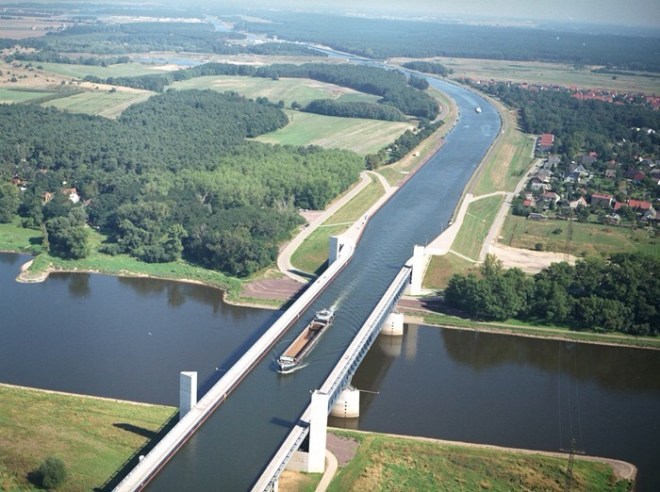
  • Magdeburg Water Bridge, in Germany, the longest such bridge in the world.
    Magdeburg Water Bridge, in Germany, the longest such bridge in the world.
  • Florida requires three “readings” before a bill can become Florida law. The legislation for a statewide anchoring law may die within the 60 day legislative session for lack of a scheduled third reading– or not”.

    http://www.waterwayguide.com/latest-news/news/5008/florida-anchoring-legislation-update-for-april-23

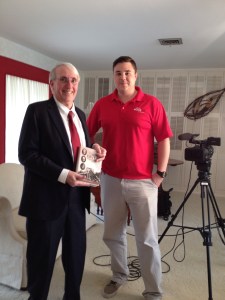
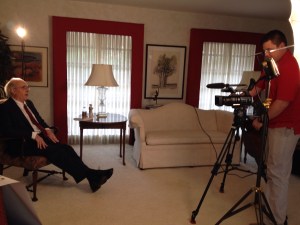
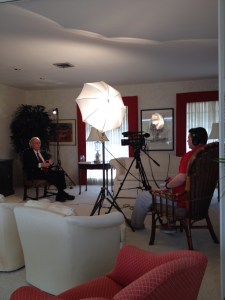
  • IMG_0169William G. Crawford, Jr., lawyer, historian, and author was interviewed about his award-winning book by C-SPAN for airing the weekend of May 16-17, 2015, on C-SPAN 2 (Book TV).  The 20-25 minute interview will run continuously during this block. IMG_0171IMG_0172
    IMG_0176IMG_0179IMG_0181IMG_0174

  • William G. Crawford, Jr., author of the award-winning “Florida’s Big Dig,” is to be interviewed by Jason Dorman, a graduate of Flagler College, for C-SPAN 2 Book TV.

    The interview is to air the month of May, with a special emphasis on a showing throughout the weekend of May 16 through May 17, 2015.

    William G. Crawford, jr, Esq., Florida attorney, historian, and author of "Florida 's Big Dig."
    William G. Crawford, jr, Esq., Florida attorney, historian, and author of “Florida ‘s Big Dig.”

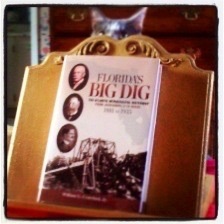
    The story of the Florida link in the Atlantic Intracoastal Waterway, “Florida’s Big Dig” won the Rembert Patrick Award in 2008 for the Best Scholarly Book on a Florida history topic given by the Florida Historical Society.

    C-SPAN is in the midst of a campaign of focusing on the history of smaller cities and towns and their authors. This weekend C-SPAN has been taping in St. Augustine, Fla.

    Even Whiskers likes "Florida's Big Dig."
    Even Whiskers likes “Florida’s Big Dig.”
  • Barge in the Gulf of Mexico in the Gulf Intracoastal Waterway at Centerville, Louisiana, plant

  • https://youtu.be/JyrTAgJ3zGw

    Congress mandates a survey of the Florida stretch of the Atlantic Intracoastal Waterway at least annually.

    The author joined Col. Alan M. Dodd, Commander of the Jacksonville District and Corps support personnel, along with the federal Waterway’s official local sponsor, the Florida Inland Navigation District and its Commissioners, on the survey of the stretch from Stuart, Fla., to Fernandina Beach, Fla., from Wednesday, April 1, 2015 to Friday, April 3, 2015

    Along the way, various Corps and FIND personnel as well as private contractors demonstrated the work and projects underway in the Waterway. We heard an update on the removal of the sunken barge from the Fort Pierce District, a dredge contractor joining us while underway to explain the work and challenges in removing rocky spoil with long distance pump dredges, the Corps’ work in managing exotic vegetation along the Waterway, and an update on Jaxport at Jacksonville.

    A stop was made just south of the Palm Valley Bridge to meet with a homeowner whose dock encroached on the federal government’s right of way. The Colonel explained that several letters had been directed to the homeowner without compliance. Either the homeowner could remove the offending structure or the Corps of Engineers would remove the encroachment and place a lien against the owner’s entire property for the federal government’s expenses in removal. No word yet on whether the owner would comply.

    A special treat was to make the transit aboard the FLORIDA II, A 62-foot, all steel, catamaran hydrographic survey vessel specifically designed for the Corps of Engineers.
    The vessel’s top speed is 40 knots; 3 knots when under survey. Enjoy this short 4 minute videotape.

  •  

    On February 25, 2015, a barge sunk in the Fort Pierce Inlet, closing access to marine traffic until removal on April 16, 2015.

  • What more can you do to preserve anchoring in FL? UPDATE

    Region: General
    Date Reported: Apr 10, 2015
    Reported By: Mike Ahart, News Editor
    Source: WG Staff

    CRFund.jpg

    UPDATE:  you can help greatly by attending Senate and House hearings this Tuesday, Apr. 14, 2015, inTallahassee – 9 a.m. and 1:30 p.m. A Senate committee hearing for SB-1548, which includes teh anchoring restriction within 200′ of waterfront residences, is scheduled for 1:30 p.m. We were hopeful that an amendment would be introduced to change the setback provision, but none has been put forward thus far.

    The House bill on at-risk vessels (House Bill 7123 ) will be read in committee at 9 a.m. Although this bill does not include anchoring restrictions for vessels that are neither considered “derelict” nor at risk of becoming derelict, amendments may be introduced to more closely match the Senate bill.

    If you can join SSCA, AGLCA and BoatUS Tuesday in Tallahassee, please do. If you plan to go, or if you need or could help set up transportation or a carpool, let me know and I’ll connect you with others who will be there – a large showing by cruisers will make a difference!

    (EDITORIAL) As a restrictive anchoring bill pushes its way through the Florida legislature, cruisers have voiced their disapproval by writing State Senate and House members, and spreading the word to other boaters. The Seven Seas Cruising Association (SSCA) has led the effort in Tallahassee, with support from BoatUS, America’s Great Loop Cruisers’ Association (AGLCA), and other concerned cruisers.

    Although most of these folks are volunteering their time and effort, the costs of research, travel, and other expenses have been mounting. Meanwhile, many Florida towns and businesses which welcome and rely on the influx of cruising tourists have not yet recognized the likely negative consequences stemming from the proposed 200-foot residential setback rule.

    Here’s a couple ways we can help:

    SSCA has set up the “2015 Cruisers’ Rights Fundto help defray the costs and increase the effectiveness of our efforts. From the donation page:

    “The Concerned Cruisers’ Committee (CCC) of Seven Seas Cruising Association (SSCA) has, for many years, supported the rights of cruisers to navigate, anchor and enjoy the “Seven Seas” both in the U.S. and abroad. We have had recent success in Annapolis and in Georgia, and we are engaged in South Carolina, Washington and California. 

    “Last year we helped to defeat a hostile amendment to the FWC Budget that would have limited anchoring in most of Broward and Miami/Dade. Anchoring opponents have introduced a new bill that is even more onerous and would dramatically limit anchoring in Florida. SB1548 is being heard by committees as your read this, and SSCA is there, on the ground, fighting for your right to anchor.”

    Any little bit you can donate will help – visit the 2015 Cruisers’ Rights Fund page to help.

    Another way you can help is by informing the marine stores, marinas, gear manufactures, town tourism councils, etc… that this legislation would set an onerous precedent and could negatively affect boating in Florida – and every other state where there is navigable public waters.

    Some might still be thinking that a 200-foot residential buffer wouldn’t affect cruisers much. But the fact is that, especially when a vessel’s swinging circle is added to the buffer, many anchorages relied on by cruisers would become effectively off-limits, affecting not only the freedom, but the safety of cruising boaters. More importantly, the 200 feet could later grow to 300 feet (that’s the length of a football field, by the way) or more, and the Florida precedent might pave the way for legislation in Georgia, or Maryland, or Michigan.. Courtesy, “Cruising News,” April 10, 2015.

  • Gondola Through Venice

    laura's avatarBucket List Laura

    Venice is my favorite place in Italy, and I had the unforgettable experience of gliding through the canals on the city’s most famous form of transport

    View original post 461 more words