Corps has $2.4 million for Waterway dredging at IOP, Sullivan’s
Florida’s Big Dig
The story of the Intracoastal and other thoughts on water, waterways, land, and ecology
-
Corps of Engineers to dredge north of Charleston, SC
Despite the President’s promise to fund shovel-ready projects, the photograph here clearly depicts a vessel run aground in shoaled water in the ICW, a federal waterway. Entire stretches are two feet deep or less where federal law requires a minimum controlling depth of twelve feet. After decades of neglect and without requested funding, the Army Corps of Engineers will begin the elimination of shoaling at the Isle of Palms stretch several miles north of Charleston, SC, this fall, 2015. The Corps intends to spend $2.4 million on the project.
Prediction: Too many millions of dollars and several decades short, Congress will fail again in its commitment to maintain a federal waterway. The federal government expressly agreed to maintain this and many other waterways if the states kept up their end of the agreement as “local sponsors,” as referred to in federal legislation. Not one state has failed to comply with its promises. Where has Congress been in failing to keep its end of the bargain in Florida? No one seems to know. “When in doubt, mumble. When in trouble, delegate. When there is time, ponder.” Nothing ever gets done in Washington because bureaucratic legislators mumble, delegate, ponder and never hold anyone accountable.
-
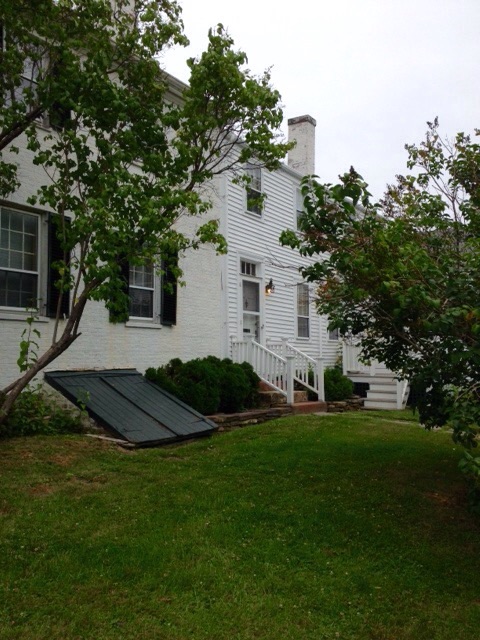
A typical Maine residence painted in white with green shutters, and connected barn -
During a meal time in London, diners as well as passersby came to the aid of a cyclist trapped beneath a double-decker bus.
A crowd estimated at between thirty to forty lifted by hand a fourteen ton double-decker bus from a cyclist caught beneath the bus. His latest condition is listed as “serious.”
Highlight and Tap above Line.
-

Typical riparian/upland land during the morning in June on Sheepscot Bay. -
A typical house in Wiscasset or Edgecomb painted in white with green shutters, and barn The State of Maine was at one time part of the Commonwealth of Massachusetts. Some of the following photos are of Down East, part of Maine, or the mid-section of the Atlantic coast of Maine. Some of the villages and towns include Wiscasset, Edgecomb, and Damariscotta.
The entire town of Wiscasset, Maine, is preserved as a National Historic Landmark. A typical plan is a wood frame house with a fireplace in the living room, staircase running up the middle of the house, double-hung windows and green shutters on both sides, with a living room on one side, and a dining room on the other side. The bedroom areas occupy the second floor. It is unusual in the area to see a house painted in any color other than white.
The Town of Wiscasset is known for Red’s Lobsters, the phone-booth sized dispensary of the best lobster sandwiches on the planet. And that’s no exaggeration.
-
The source of the San Antonio River, a major waterway in Texas, is a series of springs originating about four miles north of the center of town, running southeasterly 240 miles until it ends at its mouth, the Gulf of Mexico.

Banks of the San Antonio River. River Walk runs approximately one level down from automobile street level, paralleling the San Antonio River with shops and restaurants open morning, noon, and night.
Long, slender riverboats filled with passengers run the same time periods providing transportation to tourists with access to the various major hotels lining the River Walk as well as openin shop for extended periods of time with entrance at the level of the streets adjoining River Walk for workers who must work extended hours.

San Antonio River Walk brings stores, offices, and theaters one floor below street level At the beginning, something of a legal war began when both the City of Fort Lauderdale, Fla., and San Antonio, Texas sought exclusivity of one service mark over another in the use of the words “River” and “Walk”. A compromise was reached when San Antonio agreed to use just the words “River” separated by a space and “Walk”, while Ft. Lauderdale agreed to use “Las Olas Riverwalk”. The legal wars were over practically before they began.
-
In 1961, President John F. Kennedy named Frank D. Reeves, a Howard University law professor, as his advisor on minority affairs, the first African American chosen to serve as a presidential advisor. That same year, in December, Reeves defended the NAACP and two prominent Fort Lauderdale, Fla. blacks, a physician, Dr. Von D. Mizell, and Eula Mae Johnson, head of the local branch of the NAACP, in a lawsuit brought by the City of Ft. Lauderdale in the Broward County (Fla.) Courthouse to stop the ‘wade-ins’ at the Ft. Lauderdale beaches that had taken place over a six-week period in July and August 1961. Trial began in December 1961 without a jury before an elected, white, state court judge, Ted Cabot, a legendary jurist who later became Fort Lauderdale’s first resident federal judge.

Frank D. Reeves, presidential advisor to JFK, Howard University law professor, and oattorney for NAACP and others in city of Ft. Lauderdale, Fla., v. NAACP et al.. Several months later, Cabot sided with the NAACP, Mizell, and Johnson and against the City, upholding the right of all citizens to enjoy the City’s public beaches. The wade-ins started when local authorities failed to complete bridge and road access to the ‘Colored Beach’, purchased by Broward County for $1.6 million to preserve segregated beaches, and used by blacks only, beginning on the Fourth of July in 1954, just two months after the release by the U. S. Supreme Court of the Brown decision. That first formal wade-in took place on the Fourth of July, 1961, after seven years without road and bridge access.
Eula Mae Johnson and Dr. Von D. Mizell led the first of many wade-ins in the summer of 1961.
What prompted this post is the present condition of the Frank D. Reeves Municipal Building built in 1986 and named in honor of the Howard University law school professor and civil rights activist after he died at age 56 in 1973. At present, the Reeves building is a disgrace to Reeves’ name. Rain-soaked, poorly maintained, the Reeves building houses a hodge-podge of city departments, nonprofits, and offices for public officials with vague descriptions of uses. Nevertheless, the land alone in southwest Washington, D.C.., is worth $33 million, according to a local appraisal. With the dilapidated structure added to the land, the total value rises to anywhere from $55 million to $60 million.
For over a year, the building has been a pawn in a multi-million dollar soccer stadium deal. At first, it looked like the Reeves building would be traded to a third party to help pay for a soccer stadium. Lately, the mayor has championed the Reeves building. Let’s hope the rest of the council follows suit and the City Council of Washington, D.C. acts swiftly to properly maintain the facility and uphold the memory of Frank Daniel Reeves, an architect of the Brown briefs before the Supreme Court, law professor, pro bono attorney for the poor, and champion for the civil rights of all Americans.
-
It took 40,000 workers 17 years to complete the Three Gorges Dam in China.
This videotape lasts about 45 minutes, but is very interesting if you can spend the time.
The primary purpose of the Dam was to tame the violent Yangtse River, which every decade or so would flood and demolish whole villages and drown thousands of villagers.
The secondary purpose of the dam was to generate hydroelectric power. Today, when all of the generators are brought online, the Three Gorges Dam will generate more hydroelectric power than any other similar plant in the world.
-
Lake Mead, largest water reservoir in America, resulted when thousands of out-of-work men and women built the Hoover Dam during the Depression.The dam served to not only tame the Colorado River but create a water resource for Nevada and New Mexico and generate electricity for hundreds of thousands of people throughout the West.
Unprecedented drought has brought the levels of Lake Mead down to historic lows not seen since the 1930’s. The so-called ‘bathtub ring’ shows the dramatic decrease in water level.


 Florida’s Big Dig