I am Bill Crawford. I was born and raised in Ft. Lauderdale, Fla., bisected by the Intracoastal. I graduated from the University of Virginia with a bachelor’s degree in commerce, with distinction, concentrating in finance. I obtained my juris doctor degree from Stetson University College of Law. I have practiced law for more than 43 years. I am a professional historian and author of the award-winning book, “Florida’s Big Dig,” (2008) the story of the Atlantic Intracoastal Waterway.
I have practiced law in Florida since 1975. Along the way, I developed a keen interest in researching and writing history, publishing numerous scholarly journal articles and one award-winning book, “Florida’s Big Dig,” the story of Florida’s Atlantic Intracoastal Waterway, using my legal pbackground to understand legal transactions, deeds, wmortgages, bonds, preferred stock, and legal descriptions of land and water.
In recent years, I have maintained a limited practice consulting with other professionals on various historical land and water issues, including sovereign, riparian, and submerged land rights, focusing on the Atlantic Intracoastal Waterway and Florida inland waterways.
I maintain a broad regular website here at www.floridasbigdig.me and a website solely on how the book was researched as well as some of the major themes explored. The website on the book itself is at www.floridasbigdig.com.
The website on contacts for professional services is at www.floridasbigdiglawyer.com?. A fifteen-page outline of my book
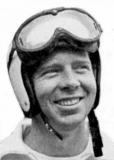
Don Wilson, hydroplane speed boat racer, died on June 19, 1966, on a day forever remembered as Black Sunday, when three driver died in two separate accidents in two venues on the same day.
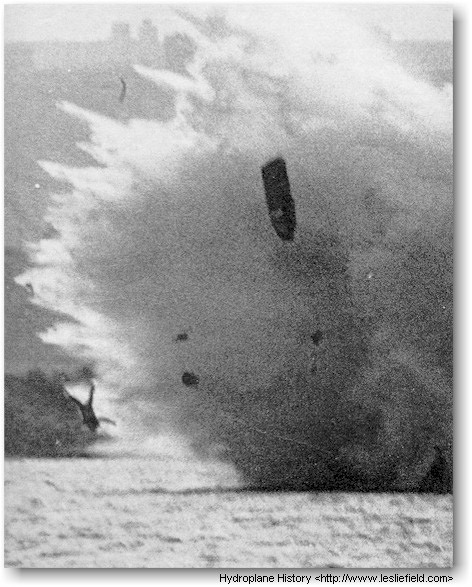
Don Wilson, younger brother of Stu Wilson, also a hydroplane racer, died in a fiery crash in Acalpulco, Mexico, on June 19, 1966, when Don collided with another hydro driven by Rex Manchester. Hours earlier, in a single crash, Ron Musson died in Washington, D.C.., on the Potomac River, vying for the President’s. Cup. The death of all three on the same day has come to be forever known as Black Sunday.
Every year, like birds flying south to avoid the winter snow and cold, many northerners transit by boat to occupy slips and fill marinas with visitors during the raw winter months. If last year’s house-high snowdrifts are any indication, perhaps even more ‘snowbirds’ will travel south for the winter. For boaters, extended bridge work in Virginia will make the transit south even more difficult. One on-line sailing magazine has already prepared travelers for extended slow travel, surmising perhaps even a few days or more delay.
From Waterway Guide:
Bottleneck at the Belt Line – Norfolk VA – UPDATE
Region: Chesapeake & Delaware Bays Date Reported: Oct 23, 2015 Reported By: Mike Ahart, News Editor Source: WG Staff
UPDATE: In response to the overwhelming feedback the Coast Guard has received, primarily from the recreational boating community, it is strongly considering altering the closure times recently released in a Marine Safety Information Bulletin (MSIB 15-031), according to an email sent this morning by LT Woodman, USCG Sector Hampton Roads Waterway Management: “What we are currently considering is: From 1100 to 1900, daily, from October 29, 2015 until November 5, 2015, the Norfolk Belt Line Railroad Bridge will remain in the closed-to-navigation position (with a) scheduled lift time…at 1500 daily.”
I think this will be a great help to cruisers (as long as they know about it!) compared to the other schedule, allowing cruisers a more leisurely, less crowded pace in the morning. Nighttime closures would be better, but apparently that was not going to work for the contractors.
The Coast Guard is asking for additional input before they make the final decision, particularly from commercial vessel interests, by 1200 today:HamptonRoadsWaterway@uscg.mil.
Also, cruisers have reported this morning that, although closures are scheduled today (last day of the original closures), the bridge was in the up position this morning at 8:45 with no sign of work or workers.
The last two weeks in October is the busiest time for cruisers moving through Hampton Roads southbound. Cruisers gear up for the migration at the several mid-October boat shows and rendezvous on the Chesapeake Bay, and many boat insurance policies require vessels to stay above a certain “hurricane” latitude until Nov. 1.
So why was a major closure of the waterway scheduled for the busiest time of the year? I contacted the Coast Guard and the railroad to find the answer – but first, the situation.
The normally-open Belt Line Railroad Bridge at Mile 2.6 has been closed daily this past week – Oct. 16-23, 2015 – with only 3 openings each day between 7 a.m. and 6 p.m. (9 a.m., 12 noon, and 3 p.m) for a maintenance project to replace the ties across the lift bridge. The Coast Guard rule was published “without notice,” which is common for emergency situations. The rule also stated “The Coast Guard has carefully coordinated the restrictions with commercial and recreational waterway users” – I am not sure who it coordinated with, but I would guess that most every marina, bridge tender, and local Coast Guard crew member knows that this is the busy season for the southbound migration. The Coast Guard did not solicit comments before the closures were announced in early October.
The project will not be completed by tomorrow, so the USCG is now proposing to extend the ICW closures, Oct. 29 to Nov. 5, and this time it is soliciting comments – and it’s received plenty.
The Sail to the Sun Rally waited for the 0900 opening this morning (see photo). Waterway Guide Editor-in-Chief Ed Tillett counted around 70 vessels waiting. The “bunching up” of boats has meant slow going all the way through the locks and beyond. Some cruisers have reported that they have come through the Belt Line at the 3pm opening and could not get to the Gilmerton in time for its rush-hour closure 3:30-5:30pm.
Tim Leighton on SV Magic transited on Tuesday (Oct. 20): “Huge goat rope at the bridge with well over 30 boats waiting to pass at the 1200 opening. They were 10 min late opening which created an almost hazardous condition as boats closed up to the bridge in anticipation of the opening. The Gilmerton opens on request but the bridge tender would not open for me until ALL sailboats (or any boat >35′ air draft) from the 1200 opening arrived. Another 15 minute wait. Lesson here is that it would help if all sailboats transit from the Belt Line RR Bridge to the Gilmerton as a group since it does no good to get ahead! Finally, Robert at the Deep Creek lock actually will do two lockings to get all boats waiting through at one time. Unfortunately, he works alone so the first group through has to wait passed the lock but north of the bridge until the second groups exits. Another 30 or so minute delay but far better than waiting for the next scheduled opening. Kudos to him!”
I talked with LT Lisa Woodman of USCG Sector Hampton Roads Waterway Management. She said the Coast Guard has no control over the maintenance schedules of federal rail lines; however, they have been working with the Coast Guard bridges office and the Norfolk & Portsmouth Belt Line railroad concerning the new proposed closure. “We have gotten a significant amount of public concern regarding the closure. While it is impossible for (the railroad) to delay the maintenance due to safety reasons, they are considering having the bridge fully open October 31st and November 1st (the weekend) and/or shifting the opening schedule if there are better times which would assist boaters in completing their transits.”
Some of the comments submitted by boaters, marinas and other stakeholders ask whether the rest of the maintenance could be done at night. Boaters have reported that some openings have taken over a half an hour with the bridge open just to get all the boats through. If you add time it takes to open the bridge manually, plus all of the prep and reset work the construction crew must need to do, just those 3 openings a day could hamper the maintenance work considerably.
I asked the railroad these questions:
Was it imperative that this maintenance be performed at this particular time, or could it just as well been originally scheduled in, say, mid-November?
Could the maintenance have been done at night?
Did you need to receive Coast Guard approval before scheduling the maintenance?
Donna Coleman, Vice President of Norfolk & Portsmouth Belt Line Railroad immediately responded:
The NPBL is just starting the grain season, the heaviest cargo we handle. The volume of inbound trains precludes us doing the work later in the season because it would have a trickle-down effect causing congestion on railroads across the country. The work needed to be done for safety reasons before these heavier trains started arriving.
Our contractor originally told us it was not safe to be working at night. Since the project is going to run long we are asking if the last portions could be finished at night. (In a follow up email, relayed that the “contractor is still very concerned about safety at night…there are also some parts under the bridge that they say can’t be done at night.”)
The Coast Guard did solicit input before giving their approval for the closings. We actually modified our schedule to accommodate a request made through them.
Coleman added: “We are very sorry for the inconvenience this has caused but a failure on this bridge could affect both rail and maritime traffic for a much longer period. We are trying to be proactive in preventing such an incident.”
The 26-mile-long rail line serves a number of terminals in the Hampton Roads area, connecting to the CSX, Norfolk-Southern, Bay Coast, C&A, and Commonwealth railroads.
Sail to the Sun ICW Rally leader Wally Moran commented on the closures: “Frankly having now navigated that section this morning I don’t think (there is) any excuse for not going to a nighttime work schedule. It is hazardous in the extreme, particularly for the recreational boaters who are not as well trained, and I make that comment as a professional mariner and charter captain.”
Questions and comments concerning the proposed dates may be directed to Coast Guard Sector Hampton Roads Waterways Management Division, (757) 668-5580, email HamptonRoadsWaterway@uscg.mil – Deadline for comments is tomorrow Oct. 23.
“Grandmother,” rendered in oil by Michal Hunter of Washington, D.C..
Michal and I, along with 248 seniors, graduated from Nova High School, Davie, Fla., in 196&, the third graduating class to graduate from the Ford Foundation sponsored public high school and the first truly integrated school in Broward County. Thank you, Dr. Charles Forman, our outstanding teachers, and other supporters for fighting the good fight and giving us the opportunity for an education ‘for a lifetime’.
Black Sunday: a day of tragedy when three speed boat drivers died on the same dayOn Sunday, June 19, 1966, three experienced hydro speed boat drivers died on the same day in Washington, D.C.., vying for the President’s Cup, in the Potomac River Basin.
The first driver, popular Ron Musson died in in a spectacular collision. Although the race conditions were less than ideal, race officials forged ahead with the rest of the race Hours later, however, two more drivers died; Rex Manchester and Don Wilson died in another catastrophic event when their boats collided.
Black Sunday shook the racing world, especially the Gold Coast Marathon, now attracting more than two hundred boats of all kinds from all over the world. It was impossible for race officials there to maintain safety with that many boats in the water.
Race officials put limits on the boats, pressing 200 mph. Race conditions were more carefully watched. In the case of the Gold Coast Marathon, it took a death before the Coast Guard stopped rhe running of the race on the Intracoastal. Driver’s helmets were harder and reinforced in the back of the neck to prevent cervical fractures and the possibility of permanent damage to the spinal cord and paralysis of the arms and legs.
The opening of the Miami Marine Stadium offered the possibility of an oval race course and other less interesting races. Still, later on, a death occurred when a famous Italian hydro speed boat racer died after a collision while the driver’s widow watched the gruesome event from the stands. For several years, off-shore racing attracted several times more powerful 7-liter hydros like “Miss Budweiser” and other commercially-sponsored name branded hydros at tremendous corporate expense. In Fort Lauderdale, Fla., Alan Vordermeier both drove and brought to the table the large corporate sponsors necessary to fund the hydros, drivers, mechanics and other support staff able to commit the time to race for months at a time in venues throughout the country and occasionally in Canada.
Black Sunday still places an indelible mark upon the memories of the “old-timers’, some like Stu Wilson, who as a 28-year-old first-timer, won the 1956 Gold Coast Marathon. Stu died a few months ago in his 80’s. His were the golden years of speed boat racing when boats of every class competed in a single race. October 19, 2015.
The sale or lease of NASA launch pads at the Kennedy Space Center as “surplus” government property raises several troubling questions for the American taxpayer. Since President Kennedy made his famous pledge that the U.S. would have a man on the moon by the end of the 1960’s, the federal government has poured billions of taxpayer dollars into the program. Are these launch pads located in critical areas of the country really “surplus property”? Who makes those decisions? On what bases do the decision makers make those decisions? To whom are these decision makers accountable? Does the system of accountability really work to insure that the taxpayer receives ‘top dollar’ if an insufficient number of billionaires bid for the launch pads?
And how are the intangibles appraised? How are new products and inventions valued. If only two or three bid for these rights, is the American taxpayer still getting top dollar? If these billionaires have so much, why are they buying our government’s goods? Why don’t they build their own launch pads? These are all legitimate questions, yet only a few of us know anything about the plans of our government? When will our government tell us what it intends to do with allegedly “surplus” property. If there is money to be made, why aren’t we making it?
Anchoring setbacks and time limits discussed at Florida HouseRegion: General
Date Reported: Oct 8, 2015
Reported By: Mike Ahart, News Editor
Source: Florida House of Representatives
The State Affairs Committee of the Florida House of Representatives held a public workshop this morning (October 8, 2015) In Tallahassee FL. During the 2-hour, 15-minute meeting, several people testified as to whether the Legislature should enact new laws to address conflicts between landowners and boaters who anchor near the landowners’ property. State Representatives asked for input on possible legislation to prohibit vessels from anchoring or mooring within a certain distance from the shoreline or seawalls of residential property, time limits for anchoring in one spot or area, or both.
Committee Chair Rep. Matt Caldwell called the meeting to order.
Middle-River-Anchorage.jpg
Rep. George Moraitis, Jr. of Broward County (Ft. Lauderdale) was the first speaker. He said he would like these issues to be decided locally, and plans to introduce a bill that covers Broward County only. He said that he has constituents who complain that water skiers have no room in Middle River or Lake Sylvia, and his bill would declare Middle River a “Water Recreation Area” where anchoring is prohibited.
Quinton Waters of the Ft. Lauderdale Marine Police spoke next, saying that the complaints he hears are not about anchored boats’ distance from a property. The complaints are about boats that anchor for several months. “We had 38 boats in that little lake…and it’s also a ski zone.” “We have a boat in Lake Sylvia that has been anchored in one spot for two years.” He said that when the boater was asked to move, the response was, “it’s the only spot I can get WiFi from the hotel.”Waters also spoke about altercations between water skiers and anchored boaters due to wakes, and other incidents.
Vice Chair Neil Combee asked Waters whether the Marine Police “could just wake them out of there,” referring to the boater who has been anchored for two years. Waters reiterated that the area is a slow-speed minimum wake area, except for boats engaged in waterskiing (35 mph).
Waters said another issue stems from people who register a number of boats, anchor them, then rent them out like apartments – and as long as they keep them registered there’s not much the police can do. He also noted that a homeowner in Miami anchored several small boats to keep boaters from anchoring near his property.
A Sergeant from the Broward County Sheriff’s Office spoke next, pointing out the unique nature of the waterways in Broward – mostly canals with very little open area. “A local bill is what we need.”
Fred Karlton of Miami Beach spoke next. He said that as weather gets colder up north, boaters come south and park their boats for the winter. “It becomes very dangerous” with too many boats, blocking access to docks, anchored too close and banging into the homeowners’ docks and boats. “Our waterways literally become a shantytown,” Karlton said. “There’s a fishbowl effect at night…these people don’t leave, they’re dumping their solid waste in our waters…this is their personal playground.” He explained that he is the person who anchored 30 small sailboats in the Sunset Lake anchorage behind his house “to protect my privacy.” He listed a number of altercations and issues that he has had with boaters anchored in Sunset Lake.
When asked what restrictions he would like in a local ordinance, Karlton said he would like it to prohibit boats to be anchored during night-time hours in residential areas, citing that the mothers and the women are “living behind their curtains.”
Chairman Caldwell noted that Miami-Dade County is prohibited by charter to have local bills.
Mark Gold of Miami Beach spoke next, with similar complaints as Karlton. He said he was instrumental in developing a previous anchoring limit ordinance before it was preempted by the State. “We had asked for a 300′ setback and a 2-day limit,” and the City passed a 7-day limit (before the preemption). He also cited that boaters are dumping their raw sewage into the waterway adjacent to his property.
Rep. Matt Gaetz asked whether any tests had been done to show the extent of pollution from waste in the areas where these boats anchor for months and years. A member of the Florida Department of Environmental Protection was present and said that he would check, but the DEP could also go ahead and do the tests.
David Childs of the National Marine Manufacturers Association (NMMA) spoke next, noting that laws are already on the books to cover the blocking of navigation, harassment, and dumping waste. Childs raised the concern of unintended consequences. He said that some of the issues can be helped by derelict vessel legislation.
Missy Timmins representing Marine Industries Association of Florida (MIAF) spoke next, listing a number of concerns that should be considered, and that MIAF would like a “seat at the table.” (She did not mention the recent online survey MIAF conducted.)
Bonnie Bashem of BoatUS spoke next, pointing out that the FWC Pilot Project is ongoing with results to be reported in 2017, and that all the issues discussed today are part of the study. She suggest they should wait for the results. She also noted that a residential setback takes away from the public’s rights, and that there’s a big difference between the 7 feet or 10 feet being complained about, and the hundreds of feet being proposed.
Craig Kahn of Florida League of Cities spoke next, saying that these issues exist all over Florida. When asked by Rep. Combee how many counties would want anchoring ordinances, he said that he would expect a significant number of them would. He said he supports a minimum standard statewide with the ability for counties to apply for stricter local regulations.
Daisy-Docks.jpg
Steven Webster of Citizens for Florida’s Waterways spoke next, proposing that mooring fields should use “daisy docks” (left) – where up to 12 boats can sit on a single mooring.
Jim Calvin of Standing Watch spoke, proposing 72-hour limits for anchoring, and that we need to affect the “bad actors.” He also warned that Florida is going to be inundated once Cuba opens up. Standing Watch is a statewide boating advocacy group.
Florida-House-Workshop.jpg
The last regular speaker was Brian Davidson of the Seven Seas Cruising Association (SSCA). He laid out the concerns that cruising boaters have with setbacks that could eliminate many viable, safe anchorages in Broward County – an area where marina slips are not always available and can be very expensive. He also reiterated that laws are already on the books for obstructing navigation, for dumping waste, and for harassment. He said that law enforcement needs more tools and resources to deal with these issues, including derelict vessels. He notes that SSCA has a lot of experts who can help, but setbacks and short time limits are not the answer.
He also raised the issue that there have been no studies of the economic impact of prohibitive anchoring regulations.
When asked about whether the SSCA would support state legislation to solve the issues in Broward and Miami-Dade County, Davidson agreed that there are issues in those localities – not statewide – but he thinks those problems are not being caused by cruising boaters.
Capt. Richard Moore of the Florida Fish and Wildlife Conservation Commission (FWC) was called up to answer a few questions about the Anchoring and Mooring Pilot Program, and whether the laws currently on the books are sufficient to address the issues brought up. He answered that they have a number of challenges – they need to witness any dumping of waste, and if 20 boats show up blocking navigation, which is the one that has to go? Asked whether FWC is going to request two more years of the Pilot Program, he said “no.
I’ll keep you posted of any further developments. Right now, the boaters have the Constitution supporting their right to use the inland waterways reasonably.. A standoff as solid as any standoff I’ve ever seen.





 Florida’s Big Dig