The Boat Race 2014: Oxford University claim biggest win over Cambridge since 1973
Florida’s Big Dig
The story of the Intracoastal and other thoughts on water, waterways, land, and ecology
-
Florida Public Broadcasting Service – 25 stations serving as one
I like the richness and diversity of educational programming.
-

Sophie Braslau This recording is by world famous opera singer Sophie Braslau with piano in 1928. She was born in Manhattan in 1892, studied under the acclaimed teachers of her day, and made her debut at the Metropolitan in 1913 at the age of 21.
Sophie toured the United States and Europe with a repertoire of music in English, French, German, Italian, Russian, and Yiddish sung in contralto voice, one of the rarest of voices.
http://youtu.be/MJTp77BMk8A Tap here to hear this rare recording of Sophie’s voice in a Columbia recording in 1928.
Sophie died of cancer at the age of 43 following a long illness. Sergei Rachmaninoff was an honorary pallbearer. The music critic of The New York Times delivered the eulogy.
-

Carrie Jacobs-Bond, songwriter, singer for three U.S. Presidents
Happy Valentine’s Day, Claire
This is an early Valentine for my wife Claire and in honor of Women’s History Month, March 1 through March 31, 2016.
It is a ballad written by a woman in 1901 who sang it at the request of three U.S. Presidents. It sold over one million copies. She was the first woman to own and operate a music publishing house.
“Carrie Jacobs-Bond began to write songs in 1894 to supplement the income of her husband, Frank Bond.[1] When he died in 1895, she returned briefly to her hometown of Janesville, Wisconsin, where “I Love You Truly” was written.[2] She then moved to Chicago where she painted china and rented out rooms to make ends meet.[1] There she continued to write songs and eventually sought to publish them herself. With the encouragement and assistance of friends, including a loan from contralto Jessie Bartlett Davis, in 1901 she published a sheet music collection of her compositions called Seven Songs as Unpretentious as the Wild Rose, one of which was “I Love You Truly”.[1] She published it again as a separate song in 1906, at the same time correcting an oversight and filing for copyright. It sold over a million copies,[3] one of the earliest songs composed by a woman to achieve that distinction.[a]”
“I Love You Truly” was categorized as a “high-class ballad”,[5] a genre of the period applied to serious ballads that were suitable for cultured venues as opposed to vaudeville.[6] It became a standard at wedding ceremonies.[3] It also became a mainstay of barbershop harmony arrangers and singers.[7]”
Jacobs-Bond was invited to sing at the White House by three different presidents, and each time sang “I Love You Truly”.[8]On July 4th, 1939, during the tribute to Lou Gehrig, who had been stricken with ALS, before 61,808 fans the Yankees band played “I Love You Truly,” while the crowd sang “We love you, Lou.” “61,808 Fans Pay Tribute to Gehrig” New York Times, July 5, 1939. WGCJr. 2.11.2016
Credit: Wikipedia
-
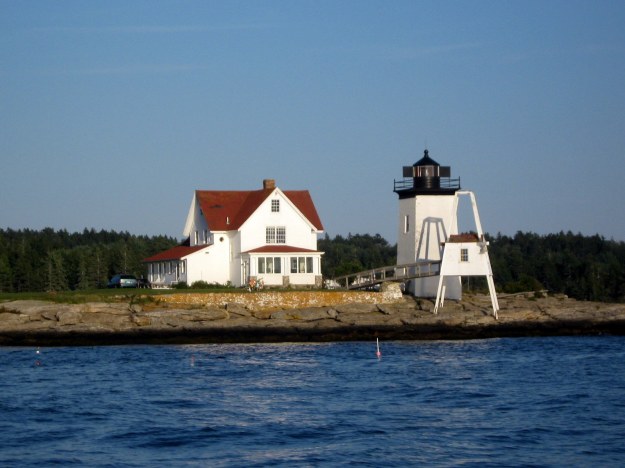
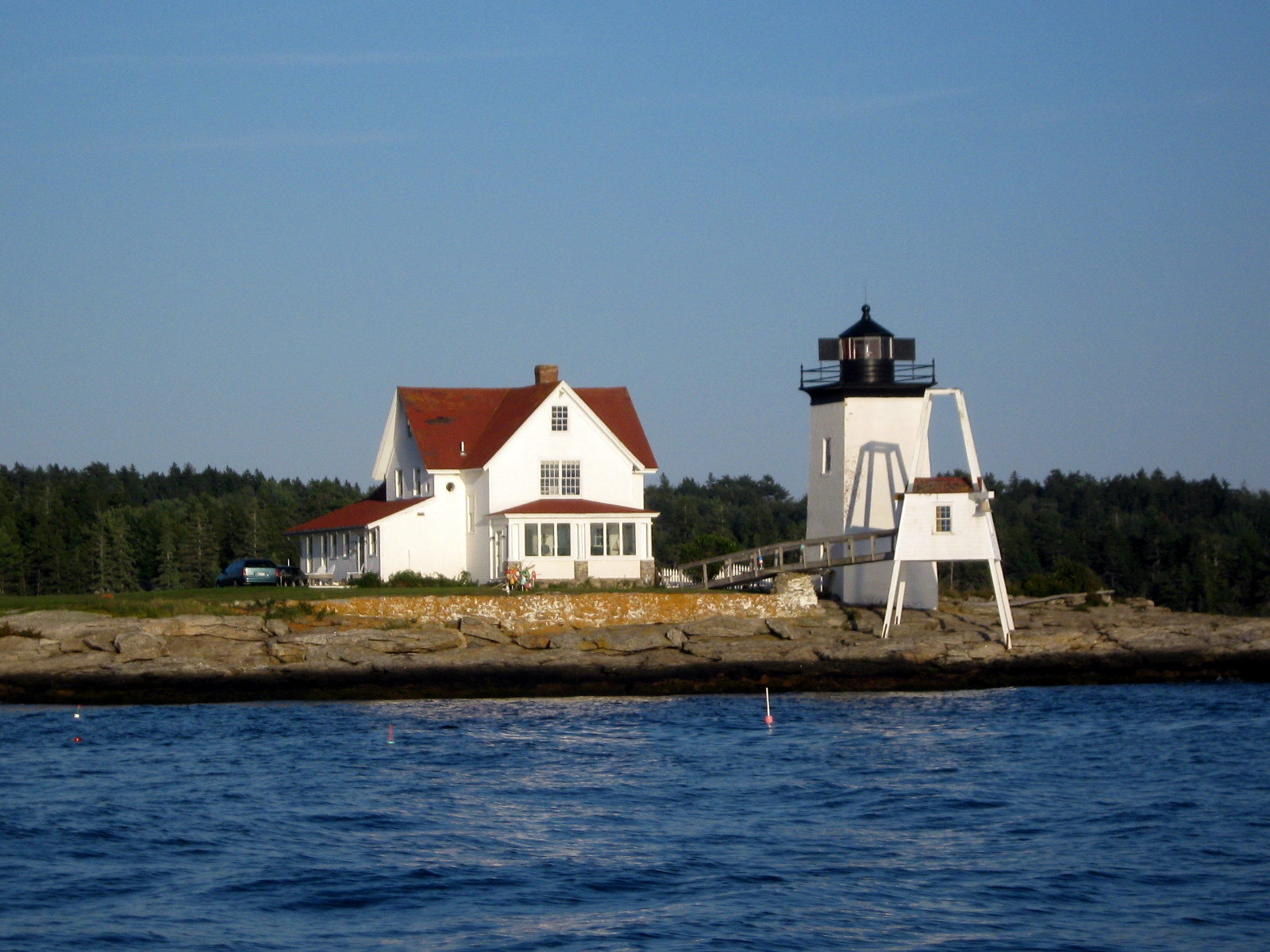
Hendricks Head Light, Southport, Maine -
Two weeks ago, The Panama Canal Authority released the most recent update. Panamax is 96% complete.
-
The Caribbean Lionfish arguably is one of the most beautiful fish in the Caribbean; this Lionfish is also arguably one of the most lethal of all fish in the Caribbean. In fact, the Lionfish will devour its own kind. It kills its prey by injecting a highly toxic poison through one of needle-like tentacles radiating from its round centrally located body.
Scientists believe that one Lionfish may eat all the fish, even its own kind within its range of habitation, in just six weeks’ time. The threat to Caribbean life in the future is real and imminent. No one knows to a certainty how the Lionfish, indigenous to the Indian Ocean, migrated to the Caribbean. Hypotheses have included by attaching itself to a ship’s cargo, by the winds, rain, and sea currents of Hurricane Andrew of 1992. The Lionfish has become a significant link in the food chain of the Caribbean. Governmental authorities permit the fishing of this beautiful fish because it poses an imminent danger to the Caribbean food-chain. Will Lionfish become a permanent link in nature’s Caribbean food chain or just a temporary aberration.


 Florida’s Big Dig